Why Co-Living Is Getting the Attention of Jacksonville Real Estate Investors
August 07, 2026
Share this
Why Co-Living Is Getting the Attention of Jacksonville Real Estate Investors
Co-living is not a new idea in the broadest sense. People have shared homes for a long time. What is changing is the way some rental properties are being designed around that idea from the beginning. Southern Impression Homes partner Jim Sheils recently joined Get Rich Education to talk about what that looks like in practice, particularly in Jacksonville. The conversation covered everything from who lives in these homes to construction, financing, parking, management and, of course, cash flow.
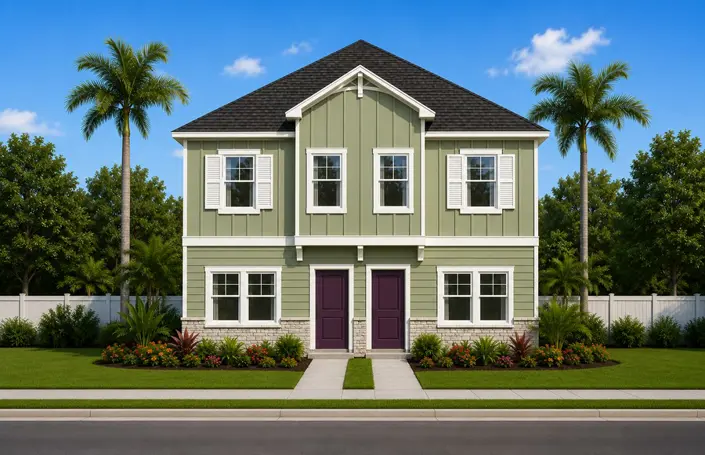
The basic idea is easy enough to understand. Instead of renting a home to one household, individual residents rent their own furnished rooms. A seven-bedroom home can therefore have seven separate residents and seven sources of rental income. That changes both how the property operates and how an investor looks at the numbers.
There Is a Housing Need Behind the Model
A big part of the conversation focused on the people actually renting these rooms. The picture Jim described was not someone without income or employment. In many cases, these are people with jobs who simply have a hard time qualifying for or comfortably paying for a traditional apartment. One example in the interview compared an approximately $1,395 one-bedroom apartment with a co-living room at about $825 per month. Residents may work at a hospital, warehouse, restaurant or another nearby employer. Saving several hundred dollars each month on housing can make a meaningful difference.
The rooms are set up to make moving in simple. A resident can have a furnished room with a bed, desk, dresser, closet and bathroom already in place, while water, electricity and internet are included. Laundry is available at the property as well, so there is no need to furnish an apartment or open several utility accounts before moving in. The average stay discussed during the interview was about six months, and residents may pay weekly rather than monthly. From the resident's side, it is a fairly practical arrangement: a private, furnished place to live without taking on the full cost of an apartment.
Building for Co-Living Instead of Converting for It
Jim spent years investing in and rehabbing existing homes, which was part of what led the conversation toward purpose-built new construction. Turning a traditional three- or four-bedroom house into a seven- or eight-bedroom co-living property can get complicated quickly. The original floor plan was not created for that many residents, and plumbing, bathrooms, common areas, parking and local approvals can all become part of the project.
Starting with new construction allows those decisions to be made before the home is ever built. The properties discussed in the interview included seven-bedroom, seven-bath homes as well as larger 14-bedroom and 20-bedroom designs. These are still shared residential properties rather than separate apartments, with a single utility setup and common living areas serving the home. Instead of trying to make an existing house accommodate co-living after the fact, the house can be laid out for it from day one.
That leads back to the three-part idea Jim returned to throughout the interview: Build right. Finance right. Manage right.
What the Jacksonville Numbers Look Like
Jacksonville provided most of the real-world examples during the interview. A new seven-bedroom, seven-bath co-living home was discussed in the range of approximately $325,000 to $345,000, with one specific example at about 1,866 square feet and $325,000. Larger properties were discussed as well, with 14-bedroom configurations around the mid-$500,000s and 20-bedroom properties in the low $900,000s. Those prices were compared with other types of Jacksonville residential investment properties, including traditional single-family homes, duplexes and quad properties.
Financing can change the picture considerably. Some co-living financing discussed during the interview was around 8%, while the in-house financing example Jim referenced was approximately 5.5%. A difference of that size has a clear effect on monthly cash flow. Projected rental income can look strong, but the financing still has to work with the rest of the numbers.
The Hard Part Is Management
One of the more interesting parts of the interview was Jim's explanation of why he waited before getting involved with co-living. Management was a major concern. A long-term rental might have one household occupying the property for a year or more. In a co-living home, several residents may have different move-in and move-out dates. Vacant rooms have to be marketed, new residents have to be screened, and the property needs more frequent oversight. The model discussed in the interview uses a management system built specifically around those tasks, including marketing rooms, screening residents and keeping vacancies filled.
That becomes especially important for investors who do not live in Jacksonville. Jim has managed traditional rentals from a distance before, but he made a clear distinction with co-living. Because there are more moving parts, he strongly favored having experienced management in place rather than trying to handle everything remotely. A property with seven individual residents simply creates more day-to-day work than one leased to a single household.
You Still Have to Build in the Right Place
Seven bedrooms also raise practical questions that do not come up with every single-family home. Parking is one example. The rule of thumb discussed in the interview was roughly one parking space for every two bedrooms, meaning a seven-bedroom property might have three or four spaces. Not every resident owns a vehicle, which is one reason access to public transportation can play a role in where these properties are built.
There are also local rules to consider. Zoning, permitting and other city or county requirements have to be addressed before construction begins. Working with a builder that understands the local approval process can help account for those requirements from the beginning rather than buying an existing house and assuming it can be converted later. Parking and compliance may not be the most exciting parts of the co-living discussion, but they can determine whether a project works before the first resident ever moves in.
Why Co-Living Is Worth Watching
Jim was open about being skeptical of co-living when he first encountered it. His view changed as he watched the model develop and saw answers emerge to some of the questions that had initially held him back, particularly around property design and management.
Co-living does not fit neatly into the usual rental categories. It is not a conventional single-family rental, an apartment building or a short-term rental. It is a shared home built around several individual residents, each renting a private furnished room. For the resident, the attraction is lower-cost housing with utilities and furnishings included. For the investor, it is the ability to collect rent from several rooms within one property. The tradeoff is that there is more to manage and more that has to be planned correctly from the start.
That is why Jim's phrase works so well as a summary of the model: Build right. Finance right. Manage right.
Watch the full Get Rich Education interview above to hear the complete discussion on co-living, the Jacksonville property examples, cash flow, financing and how these homes are operated.